
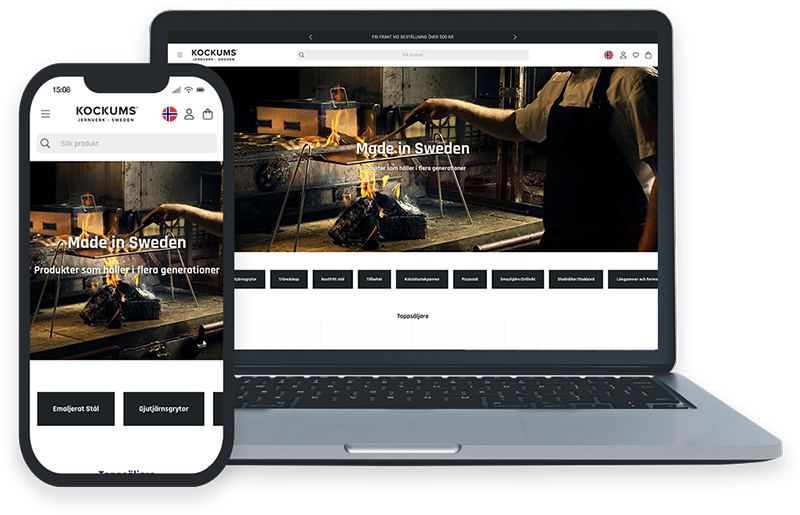
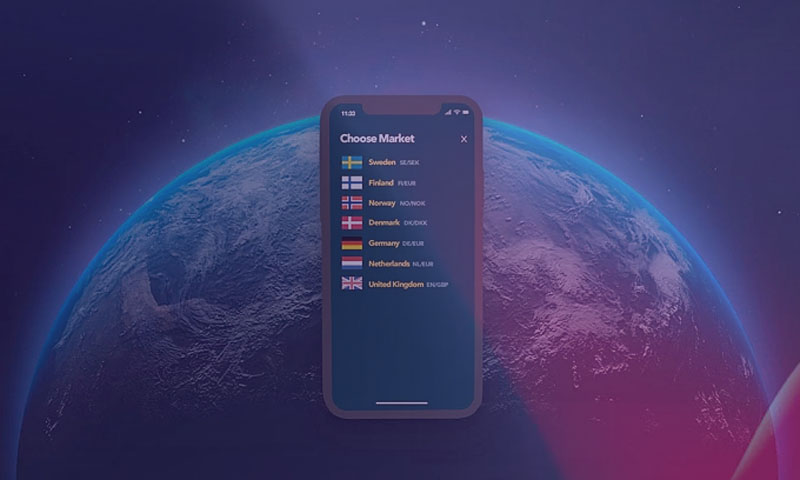
Country selector with GEO-IP
Displays the right language, currency and content based on geographic location.


Entering a new market brings great opportunities – more customer relationships, increased sales and reduced vulnerability. But getting there requires planning, strategic decisions and a clear understanding of local conditions.
A successful launch is not just about opening your online store in a new country, but about truly adapting the experience to your new target audience.
When you take the step onto the global stage, Askås offers a ready-made package of products and services to make your launch easier. Askås provides complete solutions and services to help you get started quickly and smoothly in a new market.
From language support and domain management to local payment methods and market adaptation – everything is included to create stability, security and the conditions for growth.
Read moreIn recent years, Kockums Jernverk has strengthened its position in the Swedish market and taken the step into the Norwegian market. This expansion brings new opportunities and challenges for the company as it reaches new customers and faces new requirements.
– We have high expectations and believe in the market. Our goal is to establish ourselves as a truly strong kitchen brand in Norway, says Robert Turanji, Marketing Manager.
Expanding internationally can open the door to new customers, increased sales and long-term growth. But success in a new market requires planning, understanding and the right tools. Here are ten important factors to consider when taking your business global.
Before investing in a new market, take the time to explore its potential. Look at the market size, demand for your products and the competitive landscape. Don’t forget to consider language, geographic proximity and local laws that may affect your sales. The better prepared you are, the smoother your launch will be.
Every country has its own e-commerce rules. Familiarize yourself with consumer rights, taxes, customs duties and data protection. Getting to grips with these from the start reduces the risk of costly surprises down the line.
Who is already in the market, and what are they doing well? Analyzing your competitors can help you find your own niche and position yourself more strategically. Consider both the strengths and weaknesses of existing players.
Your communication needs to feel genuine and local. Don’t just translate your copy—adapt it to local languages, nuances and tone. Thoughtful translations boost credibility and SEO by using relevant local search terms.
Customers want to buy—but only if they can pay their way. Offer popular and trusted payment methods in each market. Examples: iDEAL in the Netherlands, Girocard in Germany, Carte Bancaire in France and Vipps in Norway.
Fast and reliable deliveries are often essential. Adapt your logistics to local expectations. In some countries, next-day delivery is expected – in others, customers are more flexible. Also find out what matters most: home delivery, pickup points or the option to choose delivery days.
Customer service in English goes a long way – but not everywhere. In countries such as France, Italy and Spain, customers often appreciate support in their own language. Local understanding and tone of voice build trust and lasting customer relationships.
Reaching customers requires relevant marketing tailored to the local market. Use platforms that are popular in the market and consider partnering with local influencers. This strengthens your brand and increases engagement.
Start with a soft launch. Test the purchasing process, gather feedback and make adjustments where needed. Use analytics tools to measure traffic, conversions and customer behavior – and be ready to adapt your strategy along the way.
Internationalization is a process, not a sprint. Success is built over time through learning, adjustments and perseverance. Give yourself time to understand the new market, learn from the results and develop your strategy step by step.
Displays the right language, currency and content based on geographic location.
Generate, adapt and translate product copy for each market.
Flexible management of different currencies and country-specific VAT rates.
Connections to international logistics providers and payment partners.
Different pricing and display of products and content for different languages.
Communicate with customers in different languages via email and SMS.
Set your own prices in other currencies, with rounding and conversion management.
By country, product category or customer type.
Enables country-specific shipping options and delivery terms.
Control which language versions an administrator can access in Admin.
0533-69 16 00 | sales@askas.se
Weekdays 08–17 | Closed for lunch 12-13